
SESSIONS AVAILABLE ONLINE & IN-PERSON
Couples Therapy in San Diego, CA
Work through conflict in a way that brings you closer, not further apart.


Does this sound familiar?
You’re both trying, but things keep landing in the same place.
Many of the challenges aren’t necessarily new—they keep unfolding in the same ways over and over again. The arguments might have become more frequent. Maybe things feel quieter now, but also more distant, like somewhere along the way you started functioning more like roommates than partners. You still care about each other and want this relationship to work, but it’s getting harder to feel understood, supported, or emotionally connected in the ways you want to.
Sometimes the “issues” feel endless—like a marathon where you’re both exhausted by the end of it, but nothing actually feels resolved. You may leave those moments feeling misunderstood, defensive, shut down, or as if you’re talking at each other rather than with each other.
And for many couples, there’s more layered into their relationship than the challenge or conversation itself. Stress, family dynamics, cultural expectations, differing communication styles, or the roles you have in relationships can all shape the way you respond to each other without fully realizing it.
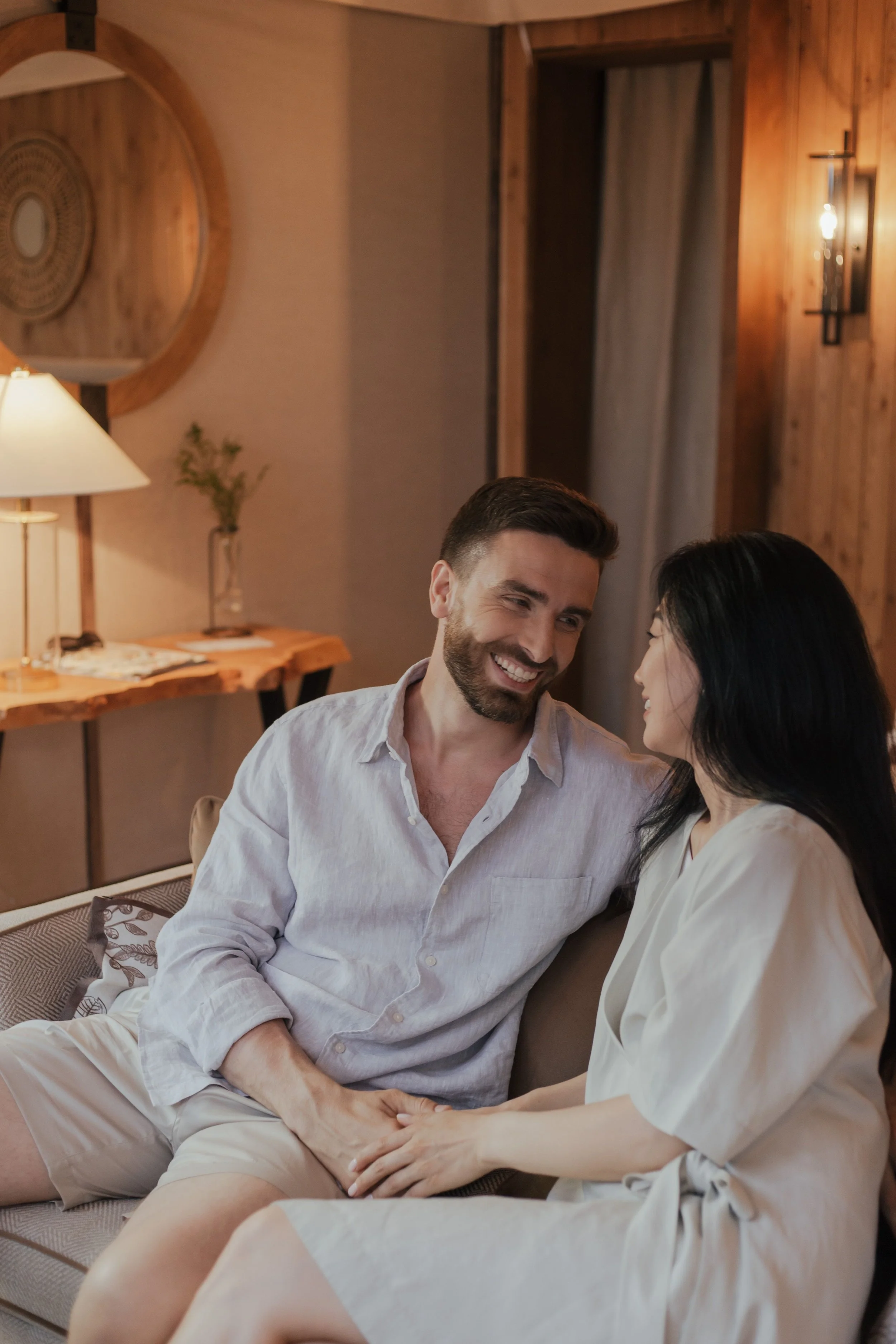

At this point, you’re tired of the “who’s right or who’s wrong.” You want to understand what keeps happening between you—and how to stop feeling so stuck in it.
MY APPROACH
You’re not disconnected because you don’t care. You’re disconnected because the same patterns keep taking over.
When we start, I want to understand your relationship beyond just the arguments or contention. We’ll explore questions like:
What drew you to each other?
What has felt meaningful in the relationship?
Where did things start feeling harder, more tense, or more distant?
Then we move toward looking at the unhealthy patterns that keep repeating themselves. Early on, I may step in more actively during sessions. I’ll slow things down, redirect the conversation, or help unpack what’s happening underneath the reaction in real time. This isn’t about controlling the conversation—it’s because many couples have never actually experienced what it feels like to move through tension differently together.
Over time, the goal is that you begin recognizing those patterns as they’re happening instead of only after the damage is done. A big part of this work is understanding what each person learned about relationships long before this relationship even existed—how you learned to handle emotions, what felt safe growing up, what made you feel valued or important, and the roles you learned to take on in order to keep connection or stability in relationships.
I also pay attention to the cultural and relational context around all of this. Messaging surrounding communication, responsibility, emotional expression, gender roles, or what it means to be a “good” partner is absorbed at an early age and can impact relationships in the long term. A lot of couples are trying to navigate not just each other, but family expectations, cultural values, trauma histories, anxiety, ADHD, or completely different ways of understanding connection and conflict.
Here, we reject the assumption that there’s one “right” way to do relationships. Couples therapy can help you discover what actually works for the two of you—the kind of relationship you want to create together, what values matter to you as a couple, and how to move through hard moments and the inevitable challenges of life without constantly turning away from each other. The goal isn’t just better communication, but helping you feel more connected, supported, and genuinely like partners and friends again.
What People Are Saying
Michelle is simply amazing. This was our first experience in couples therapy (and any form of therapy) and Michelle quickly earned our trust within the first few sessions. One thing we appreciate the most is how considerate she is in tailoring her practice and expertise with mindfulness of our cultural backgrounds. We highly recommend you meet with her!
JM

"Michelle has the right blend of compassion, firmness, structure, evidence-based practice, and experience to support her patients. My partner and I would have really struggled to grow in our relationship without her. We're so glad we reached out early to Michelle when we started facing harder conflicts. She taught us a lot about our relationship dynamic that we would have been blind to otherwise."
ML
Disclaimer: These testimonials reflect the unique, subjective experiences of former or current clients regarding their personal growth and the therapeutic relationship. They are shared with permission. These reflections do not guarantee, warrant, or predict identical experiences or outcomes for future clients. Every individual’s therapeutic journey and process of self-understanding is unique."WHAT STARTS TO SHIFT WITH COUPLES THERAPY
Conversations feel less like dead ends and more like actual understanding
Both people feel like they have space in the relationship again
You stop feeling like opponents and start feeling more like partners again
There’s less defensiveness, less mind-reading, and more curiosity
You feel more emotionally and physically connected to each other
You’re able to really hear each other with more understanding, compassion, and respect—even when you don’t fully agree

Find your way back to the version of your relationship that felt more connected and get back on the same team.

Got questions?
-
No. Many couples come in because they still care deeply about each other and want to address things before the disconnection grows further. Often, they’ve noticed more tension, repeated conflicts, or difficulty understanding each other and want support shifting those patterns before resentment builds.
This isn't the right fit for couples currently in acute crisis, experiencing ongoing high conflict, or where there are safety concerns — if that's where you're at, I'm happy to help you find a referral better suited to that level of support.
-
I’m a Licensed Marriage and Family Therapist since 2012. I’m trained in the Gottman Method and integrate attachment-based and Narrative approaches into my work.
A lot of the couples I work with are navigating more than just communication struggles. They’re also navigating stress, cultural expectations, family dynamics, differing emotional styles, or the roles they’ve learned to take on in relationships. Many are high-functioning, thoughtful people who care deeply about each other, but feel stuck in patterns they haven’t been able to shift on their own.
My approach is collaborative and active. I help couples understand not just what keeps happening between them, but why—so they can begin responding to each other differently and feel more like partners again.
-
No. My role is not to decide who’s right or wrong. My role is to help both of you better understand what’s happening between you and create a different way of relating to each other. That also means helping each person feel heard, understood, and able to show up more clearly in the relationship.
-
That’s very common. Not everyone grew up in environments where emotions felt safe, welcomed, or modeled in healthy ways. Some people learned early on to shut down, avoid conflict, focus on problem-solving, or keep emotions to themselves because expressing them led to criticism, being sent away, being told not to cry, or feeling like their emotions were too much or a burden to others. Part of the work is understanding those experiences with more compassion so you can stop interpreting them as a lack of care or a lack of effort.
-
Culture shapes a lot of how we understand relationships—often more than we realize. Ideas around communication, responsibility, emotional expression, gender roles, or family involvement are often influenced by family systems, culture, religion, and lived experiences. This can become especially important in intercultural relationships or relationships where each partner has very different experiences around connection and expectations. Rather than assuming there’s one “right” way to do relationships, we explore what values and ways of relating actually feel aligned for the two of you.
-
That’s something we can make space for in therapy. Some couples come in wanting to repair the relationship, while others feel more uncertain and are trying to understand whether the relationship can shift sustainably. My role isn’t to decide for you—it’s to help you better understand what’s happening between you, what patterns are keeping you stuck, and whether a different way of relating feels possible.
-
A lot of couples I work with are navigating different cultural backgrounds, family dynamics, emotional styles, or expectations around relationships. Sometimes one person grew up talking openly about emotions while the other learned to stay quiet or focus on problem-solving.

I’M HERE FOR YOU
The journey to happiness starts with a phone call.